

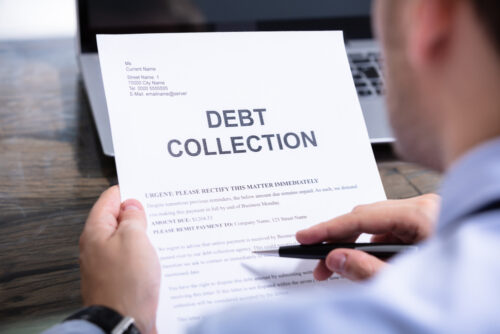
California consumers facing threats of lawsuits from debt collectors have strong protections under the FDCPA and the Rosenthal Act, including the right to demand debt verification, challenge time-barred debts, and pursue damages when collectors make illegal threats or engage in harassment.
Key Takeaways:
- Debt collectors violate federal law when they threaten legal action they don’t intend to take or legally cannot take, including threats to sue on debts past California’s four-year statute of limitations.
- Consumers should request written debt verification within 30 days of first contact, document all collector communications, and never ignore an actual court summons to protect their legal rights.
- Victims of illegal debt collection practices may recover actual damages, up to $1,000 in statutory damages per lawsuit, and attorney fees under the FDCPA.
Few things make your stomach drop faster than hearing a debt collector threaten to sue you. Whether it comes by phone, letter, or text message, the threat of legal action can send anyone into a panic. But before you lose sleep or make decisions out of fear, remember: you have rights, and many of these threats either violate the law or turn out to be empty scare tactics.
As a consumer protection law firm in California, we’ve seen countless clients come to us terrified after receiving threats of lawsuits from debt collectors. In many cases, we discover that the collector crossed legal lines just by making those threats. Let’s walk through what you should know and what steps you can take to protect yourself.
Not Every Threat of Legal Action Is Legitimate
Debt collectors know that threatening a lawsuit often motivates people to pay, even when they shouldn’t. The reality is that most debt collectors never actually pursue litigation. Filing a lawsuit costs money, takes time, and requires the collector to prove they own the debt and that you actually owe it. Many collectors, especially those who buy old debts for pennies on the dollar, lack the documentation needed to win in court.
Here’s what matters: under the Fair Debt Collection Practices Act (FDCPA), a debt collector cannot threaten to take any action they don’t actually intend to take or that they legally cannot take. If a collector threatens to sue you but has no intention of filing a lawsuit, that threat itself violates federal law. The same applies if they threaten to garnish your wages in ways California law doesn’t permit or claim they’ll have you arrested for not paying (which is illegal—we don’t have debtor’s prisons).
Know What Debt Collectors Cannot Legally Do
Federal and California state laws provide strong protections against abusive debt collection practices. Debt collectors cannot legally:
- Threaten violence or harm
- Use profane or obscene language
- Call you repeatedly with the intent to harass or annoy
- Contact you at unreasonable hours (before 8 a.m. or after 9 p.m.)
- Discuss your debt with your neighbors, coworkers, or family members (with limited exceptions)
- Lie about the amount you owe
- Pretend to be attorneys or government officials
- Threaten legal action that they cannot or do not intend to take
- Continue contacting you at work after you’ve told them your employer disapproves
California’s Rosenthal Fair Debt Collection Practices Act extends many of these protections to cover original creditors as well, not just third-party debt collectors. This gives California consumers broader protection than federal law alone provides.
Steps to Take When a Debt Collector Threatens to Sue You
Receiving a lawsuit threat feels overwhelming, but taking calm, strategic action puts you in a much stronger position. Here’s what we recommend:
- Request written verification of the debt. Under the FDCPA, you have the right to demand that the collector provide proof that you owe the debt and that they have the legal right to collect it. Send this request in writing within 30 days of their first contact. The collector must stop collection efforts until they provide this verification. Many collectors cannot produce adequate documentation, especially for older debts that have changed hands multiple times.
- Document everything. Keep records of every phone call, including the date, time, caller’s name, and what they said. Save all letters, emails, and text messages. If a collector violates your rights, this documentation becomes crucial evidence.
- Don’t ignore an actual lawsuit. If you receive official court papers—not just a threatening letter, but an actual summons and complaint—you must respond within the stated deadline (typically 30 days in California). Ignoring a real lawsuit leads to a default judgment against you, which gives the collector much more power to collect, including potential wage garnishment.
- Consider consulting with a consumer protection attorney. Many people assume they can’t afford a lawyer, but consumer protection cases often work on a contingency basis, meaning you pay nothing unless you win. Additionally, the FDCPA requires debt collectors who violate the law to pay your attorney fees, so representation may cost you nothing out of pocket.
Understanding the Statute of Limitations on Debt in California
One critical factor in evaluating a lawsuit threat is whether the debt has passed the statute of limitations. In California, most consumer debts have a four-year statute of limitations for lawsuits. This means that after four years of inactivity on the account, a creditor or collector generally loses the right to sue you for the debt.
Here’s where it gets tricky: the debt doesn’t disappear after four years. Collectors can still attempt to collect it, and it may still appear on your credit report (negative items typically remain for seven years). However, they cannot legally threaten to sue you for a time-barred debt if they know the statute of limitations has expired. Making such threats violates the FDCPA.
Be careful about one thing: making a payment or even acknowledging the debt in writing can restart the statute of limitations clock in some situations. Before you say or pay anything, make sure you understand how it might affect your legal position.
When Threats Cross the Line Into Illegal Harassment
Sometimes, debt collection goes beyond aggressive into outright illegal territory. We’ve represented clients who faced collectors calling dozens of times per day, showing up at their workplaces, or threatening to call child protective services over unpaid credit card debt. These extreme tactics clearly violate the law.
But illegal conduct doesn’t always look so dramatic. A collector who casually mentions filing a lawsuit when their company policy prohibits litigation on debts under a certain amount has still violated your rights. A collector who adds fake “legal fees” to your balance or claims your wages will be garnished next week without any court judgment has broken the law.
If you’ve experienced any of these violations, you may have a legal claim that entitles you to actual damages (compensation for any harm you suffered), statutory damages of up to $1,000 per lawsuit under the FDCPA, and coverage of your attorney fees and court costs.
How Loker Law Protects California Consumers
At Loker Law, we’ve spent over 17 years fighting for California consumers facing debt collection harassment, credit reporting errors, and identity theft. We understand how stressful it feels when collectors threaten legal action, and we know how to push back effectively.
Our firm handles consumer protection cases on a contingency basis, which means you pay nothing unless we recover compensation for you. We deal directly with debt collectors, demand they follow the law, and pursue damages when they violate your rights.
If a debt collector has threatened you with legal action or engaged in any harassing behavior, don’t face it alone. Contact us today for a free consultation and let us help you take back control of your financial life.